Hannibal museum to mark Juneteenth with special event
Published 4:51 pm Saturday, June 20, 2026
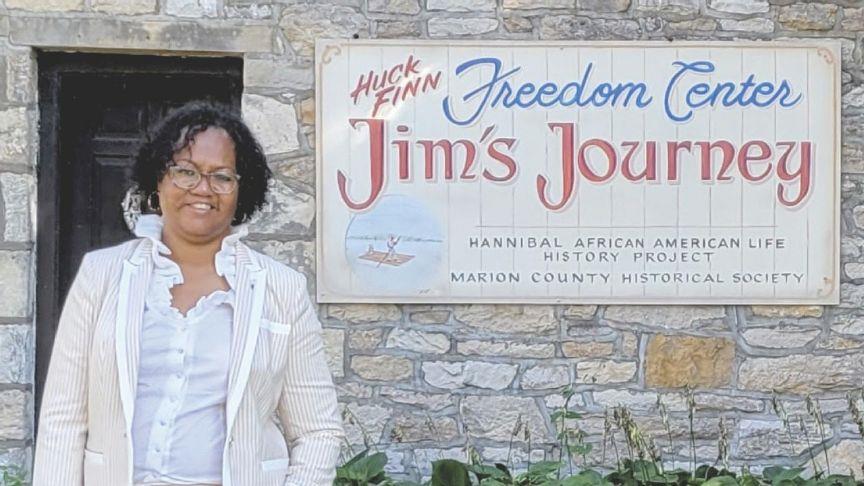
HANNIBAL — Jim’s Journey: The Huck Finn Freedom Center is hosting a free Juneteenth commemoration on Monday, June 22, 2026, at the center’s location at 509 N. 3rd Street. The event is open to the public and will feature remarks from state Senator Barbara Washington.
The celebration comes as new local research has brought long-overlooked history to light: at least 16 black women voted in Hannibal on August 31, 1920 — Missouri’s first election day following ratification of the 19th Amendment — alongside dozens of black men, many of them formerly enslaved.
That history was uncovered by local historian Faye Dant, who cross-referenced Ward One voter rolls with city directories and the 1920 Census to identify black residents who showed up to the polls on that rainy Tuesday morning, just 13 days after women’s suffrage became law. For more than a century, the story of that day had centered solely on Marie Byrum, a white 26-year-old whose vote was carefully arranged by her father-in-law, the city clerk, and the Missouri League of Women Voters. She has since been honored with a mural in Hannibal’s Historic District. The black men and women who voted that same morning had never been named in any historical account.
In all, 43 of Ward One’s voters that day were black. Some walked more than a mile to reach the polling place at the corner of Main and North Streets. The first person in line was 63-year-old Frank Woods, a retired blacksmith and former Buffalo soldier whose parents had been enslaved and brought to Missouri from Kentucky. His wife, Elizabeth, also voted. Among the women was a 19-year-old maid, the youngest of the group. More than half of those who turned out that day had themselves been enslaved.
Local newspapers recorded no incidents, but Dant emphasizes the courage the act required. Hannibal in 1920 was marked by an active local Ku Klux Klan, strict Jim Crow segregation, and the constant threat of economic retaliation against black residents who drew attention to themselves.
The broader history of black voting rights in America forms a sobering backdrop to that morning. The 15th Amendment had granted black men the right to vote in 1870, and for a brief period during Reconstruction, black Americans won elected office across the country. One of the most notable had direct Hannibal ties: Blanche Kelso Bruce, who became the first black person elected to a full U.S. Senate term, once taught school in the back of a local Baptist church at 8th and Center Streets before leaving for Mississippi to pursue his political career. His sister Luda remained in Hannibal, where she taught at the segregated Douglass School.
That era of progress was swiftly dismantled through poll taxes, literacy tests, and voting rules specifically designed to disenfranchise the descendants of enslaved people. Violence enforced what law alone could not. It took the Civil Rights Movement and the passage of the Voting Rights Act of 1965 to formally remove many of those barriers.
Against that history, the group of black men and women who made their way to Ward One on a wet August morning in 1920 — many in small groups of three, or as married couples — represent an act of quiet, collective defiance. Dant’s research into that day and the broader history of black voting in Hannibal is ongoing.
Juneteenth, observed June 19, marks the date in 1865 when enslaved people in Texas learned of their emancipation, more than two months after the Confederacy’s surrender. It became a federal holiday in 2021.
Jim’s Journey: The Huck Finn Freedom Center is free and open to the public. For more information, call 217-617-1507.