Pike County man denied presidential nomination
Published 4:32 pm Saturday, July 25, 2026
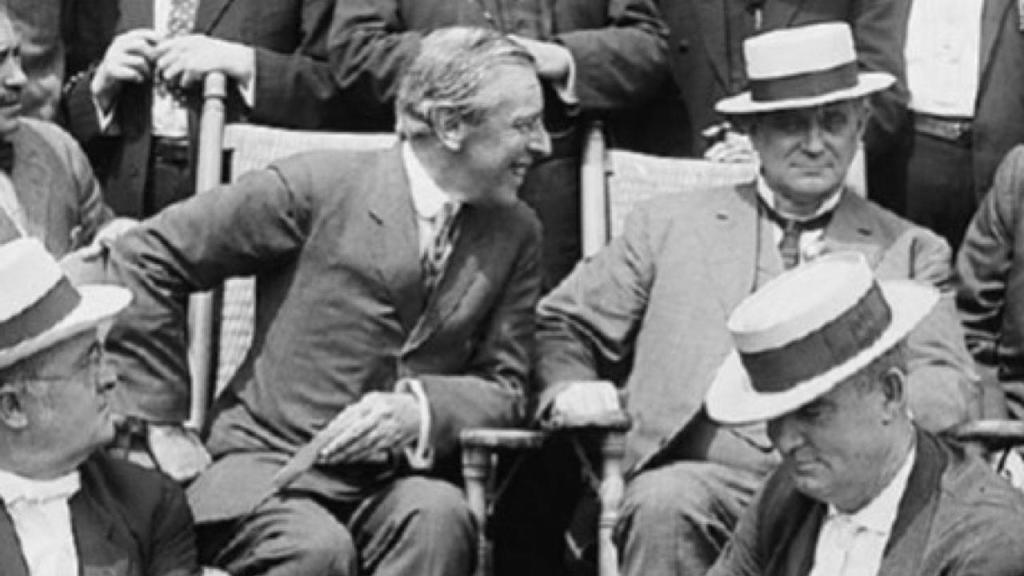
Even in defeat, Champ Clark showed what true class is all about.
In July 1912, the Bowling Green man was denied the Democratic presidential nomination by conniving jackals and an arcane rule, both from within his own party.
Sure, it was politics, and few things are more pathetically sordid. But had he triumphed, the lawyer who came to Pike County with pennies in his pocket would have occupied the White House for at least four years, and maybe longer, changing the course of history in his wake.
The Speaker of the House of Representatives had overwhelming support when the convention began in Baltimore. Today, he would have been named to the ticket right away. But in 1912, Democrats required a two-thirds majority for nomination.
In addition, three-time failed presidential candidate William Jennings Bryan of Nebraska convinced enough delegates that Clark wasn’t as progressive as New Jersey Gov. Woodrow Wilson. It took 46 ballots, but Wilson won.
Historians disagree on the impact of what transpired on the convention floor.
Author Boyce House called Bryan’s efforts his “greatest triumph” because his “whole series of maneuvers and speeches” were “bold in conception” and “brilliant in execution.”
Charles Willis Thompson, a political reporter for The New York Times, said Bryan “left the convention a conqueror, and a bigger figure than he had ever been in his life.”
Clark’s supporters were equally fervent. Louisville Courier-Journal Editor Henry Watterson called Bryan’s actions “unforgivable.” He “hoists the standard of hatred and revenge over what should be a marching army of brothers.”
Historian Richard Allen Morton called it “a ruthless and unfair twist of fate” and said Clark “was angry and hurt witnessing his seemingly inevitable victory being snatched away.”
Bryan biographer Michael Kazin said that had Clark “been quicker to recognize the game Bryan was playing in Baltimore, he would have won the nomination and probably been elected president.”
For his part, Clark said he “lost the nomination solely through the vile and malicious slanders” made by Bryan. “True, these slanders were by innuendo and insinuation, but they were no less deadly for that reason.”
Regardless, the Speaker swallowed his pride and, after the convention, met with Wilson for 80 tense minutes at the nominee’s New Jersey retreat.
Clark told reporters he would not discuss two topics. One was politics. Then, a journalist asked if Bryan would have a part in the November campaign. Clark pulled a toothpick out of his pocket and inserted it into his mouth before answering.
“I don’t know and don’t care,” he said. “That is the other thing I won’t talk about.”
When asked if he would vote for Wilson, Clark’s answer reflected his Missouri stubbornness.
“I never scratched a Democratic ticket or bolted a Democratic candidate in my life,” he said. “I shall not change the Democratic habit now. I am too seasoned a soldier not to accept cheerfully the fortunes of war.”
In the general election, Wilson handily defeated incumbent William Howard Taft, who split the Republican vote with former President Theodore Roosevelt.
Clark returned to Congress and supported many of the progressive ideas Wilson put forth during two terms while never abandoning his own more conservative principles. He died in 1921 at age 70, two days before his term was to end. Thousands attended his funeral in Bowling Green.
Clark and Bryan did reconcile after Wilson was inaugurated, although the Speaker was quick to note that it was “beyond the power of Colonel Bryan or anyone else to correct the injustice that was done to me at Baltimore.”
Clark’s wife, Genevieve, wasn’t as forgiving. The woman who once wrote that if she were a man, she would “begin running for President as soon as I was born and keep on running till I died or was elected,” had much to say over the years about Bryan and the 1912 convention.
Perhaps the most hilarious came when the author and women’s voting rights campaigner blasted states that did not support her husband. Part of it reads:
“Oh, Texas, Texas, Thy solar plexus, I’d like to give it a rap O, would my name were a magic spell I’d give you a slap That would wipe you off the map.”