Culver-Stockton professor launches AI course
Published 4:33 pm Tuesday, August 4, 2026
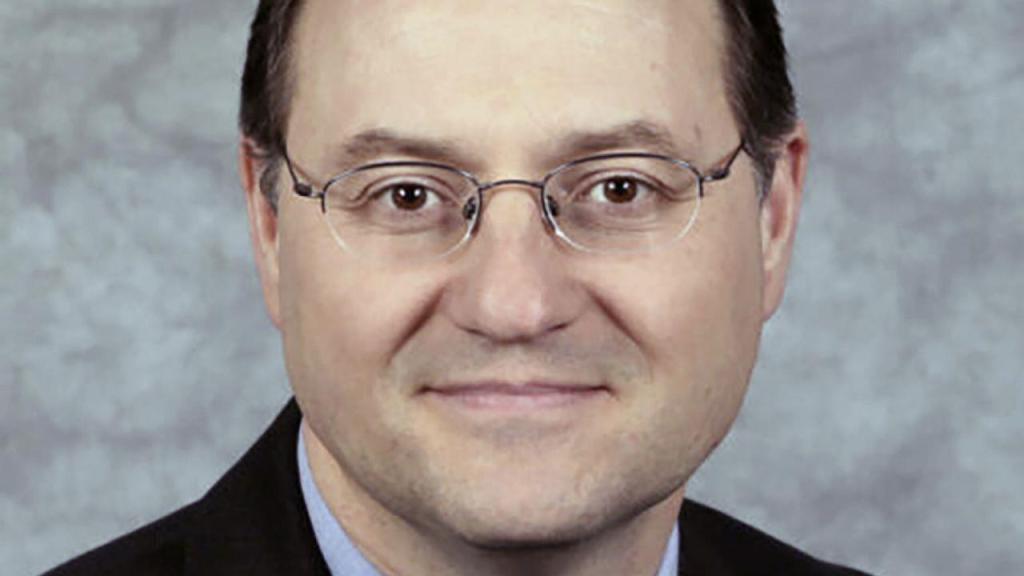
CANTON — A Culver-Stockton College professor has completed a demanding robotics certification and launched a new course of his own, part of an effort to prepare students for a job market increasingly shaped by artificial intelligence and automation.
Joe Liesen, professor of computer and data science at the college, recently completed Udacity’s Robotics Software Engineer Nanodegree, a project-based program covering robot operating systems, autonomous navigation, and computer vision. The certification consisted of six courses along with a series of increasingly complex, hands-on robotics projects.
“AI and robotics are beginning to transform many industries, and the demand is high in the job market,” Liesen said. “As a computer and data science professor, I think it’s very important to expand my knowledge and skills to include the latest technologies so my students can benefit from that.”
Liesen said the program’s biggest takeaway was understanding how the individual components of a modern autonomous robot system work together, including ROS 2 — a widely used open-source robotics software framework — along with simultaneous localization and mapping, navigation and robot perception. He said the perception component, which focuses on AI and modeling, aligned closely with his existing curriculum.
Liesen is applying that training directly in a new AI and robotics course he developed with support from a two-year grant from a private foundation. The grant funded his professional development as well as new hardware and software, including a high-performance computing platform and robots for student projects.
In his Introduction to Robotics course, students work with the same industry-standard tools Liesen used during his certification, including ROS 2 and navigation and localization systems, before advancing to robotics perception modeling in his advanced machine learning course.
“My students will be exposed to these industry trends using the same concepts and software tools and practices used by professional robotics engineers,” Liesen said.
Christe Thomas, chair of Culver-Stockton’s Division of Computational, Health, and Natural Sciences, said Liesen’s work reflects the kind of forward-looking instruction the college wants to offer.
“Joe has done some amazing work these past few months,” Thomas said. “What he’s building is cutting edge, and it’s going to help students well beyond the classroom. They’ll graduate with real, hands-on experience employers are actively looking for.”
Liesen said the goal is for students to build with emerging technology rather than simply study it, giving them experience he said will benefit them whether or not they pursue robotics as a career.
“Even if a student isn’t interested in becoming a robotics engineer, they will still benefit from understanding how intelligent systems are designed and deployed,” he said. “Exposure to these technologies helps students become adaptable in preparation for current and future careers.”
Founded in 1853, Culver-Stockton College is a liberal arts college in Canton overlooking the Mississippi River. The college enrolls more than 1,000 students and offers 80 majors and minors, five graduate programs and 21 NAIA intercollegiate athletics teams.